
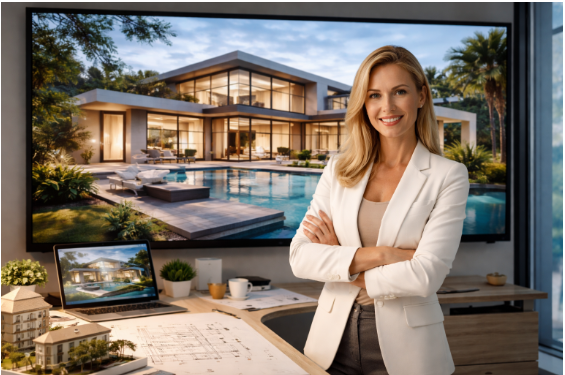
In this design-led and fiercely competitive real estate arena, architectural visualization is no longer a support tool but an influential medium affecting perception, approval, and investment. Be it a residential, commercial, or mixed-use project, the quality of its exterior presentation often predetermines judgments long before even the commencement of construction.
It is here that a professional 3D exterior rendering company plays an important role in delivering high-impact architectural visuals communicating value, clarity, and design intent.
What Defines High-impact Architectural Visuals?
High-impact architectural visuals are not the result of software alone but, as a matter of fact, they come from technical accuracy, artistic judgment, and strategic presentation.
Such visuals generally include:
- Photo-realistic lighting and shadowing
- accurate materials and surface textures
- Strong composition and camera angles
- Realistic surroundings and human scale
- A clear focus on the architectural intent
A good 3D architectural rendering company can balance realism with storytelling-the art of communicating the importance of the building without misrepresenting its design.
Translating Architecture into Visual Experience
Architectural drawings are precise, yet abstract. Most clients, investors, and decision-makers have problems visualizing space, scale, and context from the plan alone.
A professional 3D exterior rendering firm converts all these technical documents into striking visualizations that:
- Clearly show massing and proportions.
- Demonstrate Façade Design and Materiality
- Illustrate how the building fits its environment.
- Convey the atmosphere and mood of the project.
It is a transformation that makes architecture an experience people can comprehend immediately and then react to.
Visualization to Enhance Design Accuracy
High-impact visuals are not for presentation alone; they actually support better design outcomes. Exterior rendering will allow the team to gauge certain design decisions in a realistic visual context.
It helps architects and developers:
- Early identification of proportion or alignment problems
- Compare façade options and finishes
- Assess lighting conditions at different times of the day
- Refine the details prior to construction
Teams minimize risk and reduce the likelihood of expensive design changes downstream by resolving visual and spatial challenges digitally.
Building Confidence with Clients and Stakeholders
Confidence is crucial for large investment projects or those with especially long timelines. Poor or generic visuals will lead to second-guessing, reworks, and extra time to approval.
High-quality exterior renders instill confidence through:
- Showing precisely what will be built
- Eliminating ambiguity about materials and scale
- Showcase the project in a professional and polished way
- Helping stakeholders to envision long-term value
Decisions come a lot quicker and more assuredly when the outcome is in sight for the clients.
Supporting real estate marketing and brand impact.
The typical applications for outside visuals include:
- Property portals and project sites
- Online ads and social media campaigns
- Brochures, hoardings, and sales galleries
- Investor presentations and pitch decks
A reliable 3D exterior rendering company respects the marketing priorities and develops visuals that express lifestyle, quality, and differentiation without compromising architectural accuracy.
Communicating Scale and Context on Large Projects
Scale and context are very important for large developments or those with urban contexts. It enables the stakeholders to understand the relation between a project and surrounding buildings, streets, and public areas.
High-impact exterior rendering helps in:
- Showing accurate urban context
- Demonstrating height, setbacks, and massing
- Access point and public element clarification
- Supporting the planning and regulatory discussions
These visuals have proved to be very valuable in approval scenarios where clear communication greatly reduces review cycles.
Collaboration Between Architects and Visualization Teams
The best architectural visuals are the result of close collaboration. A professional 3D architectural rendering company is an extension of the design team, not just a service provider.
This collaboration involves:
- Understanding Design Intent and Priorities
- Asking the right questions early
- Adapting Visuals as Designs Evolve
Consistency Maintenance across Several Views
The process keeps the visuals in sync with the architecture throughout the project life cycle.
Most high-impact projects require different visuals for varying angles, lighting scenarios, or phases of the project. Consistency across all deliverables is a must-have for credibility.
A seasoned rendering partner will ensure that:
- Uniform lighting and visual style
- Consistent material representation
- Cohesive storytelling across all of the images
This consistency helps to enhance brand perception and avoid confusion in marketing and approval materials.
Long-term Value Beyond a Single Presentation
More often than not, exterior renderings created for one purpose continue to deliver value across many stages of a project.
They can be reused for:
- Ongoing Marketing Campaigns
- Portfolio Presentations
- Awards and Media Features
- Future phases or related developments
Such long-term usability turns professional rendering into a strategic investment rather than a one-time cost.
Why Choosing the Right Partner Matters
Not all rendering providers are the same in terms of the effect delivered. It comes down to architectural understanding, attention to detail, and reliability.
A strong 3D exterior rendering company brings:
- Architectural and construction awareness
- High standards of realism and accuracy
- Clear communication and revision handling
- Timely delivery aligned with project milestones
These qualities guarantee that visuals support real project goals and not just aesthetic appeal.
Conclusion
A seasoned 3D architectural rendering company integrates technical accuracy with visual storytelling to make each step in the design development, approval, and real estate marketing process more engaging. In an industry where perception shapes decisions, great exterior rendering is not an enhancement but a strong tool for making projects successful.